A suitcase with sleeves for combat infantry
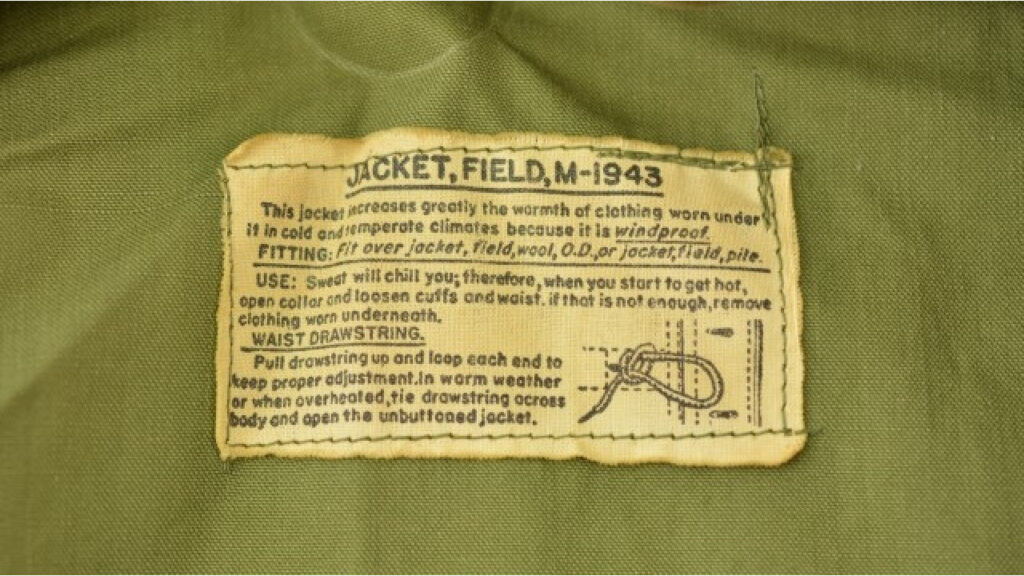
The M-43 was more than just a field jacket — it was the combat infantryman’s wearable locker, toolbox, and shelter. Issued by the U.S. Army in 1943, it was built for punishment: made of rugged cotton sateen, cut long for coverage, and layered to handle wind, rain, and cold. Reinforced buttons and practical design made it one of the most functional — and most beloved — garments of the war.
Pockets big enough for rations … and a grenade or two
Its signature feature? Four deep, expandable pockets — each the size of a small saddlebag. Combatmen stuffed them with whatever they might need to survive: Maps, dry socks, cigarettes, K-rations, letters from home, ammo clips, a dog-eared copy of A Tree Grows in Brooklyn, even a grenade or two. The M-43 let combat infantry ditch their packs—an enormous advantage on the move or in quiet moments, when unattended gear might be “liberated” by a civilian or a soldier from another unit.
The M-43 was also a signal flag. A green replacement GI’s jacket was clean, taut, and trim — fabric shiny, pockets flat. A veteran’s? Faded and stained, sagging like a sack, pockets bulging.
The M-43 wasn’t glamorous. It didn’t win battles. But it helped win the war — by keeping the man in the mud warm, dry, and ready for whatever came next.